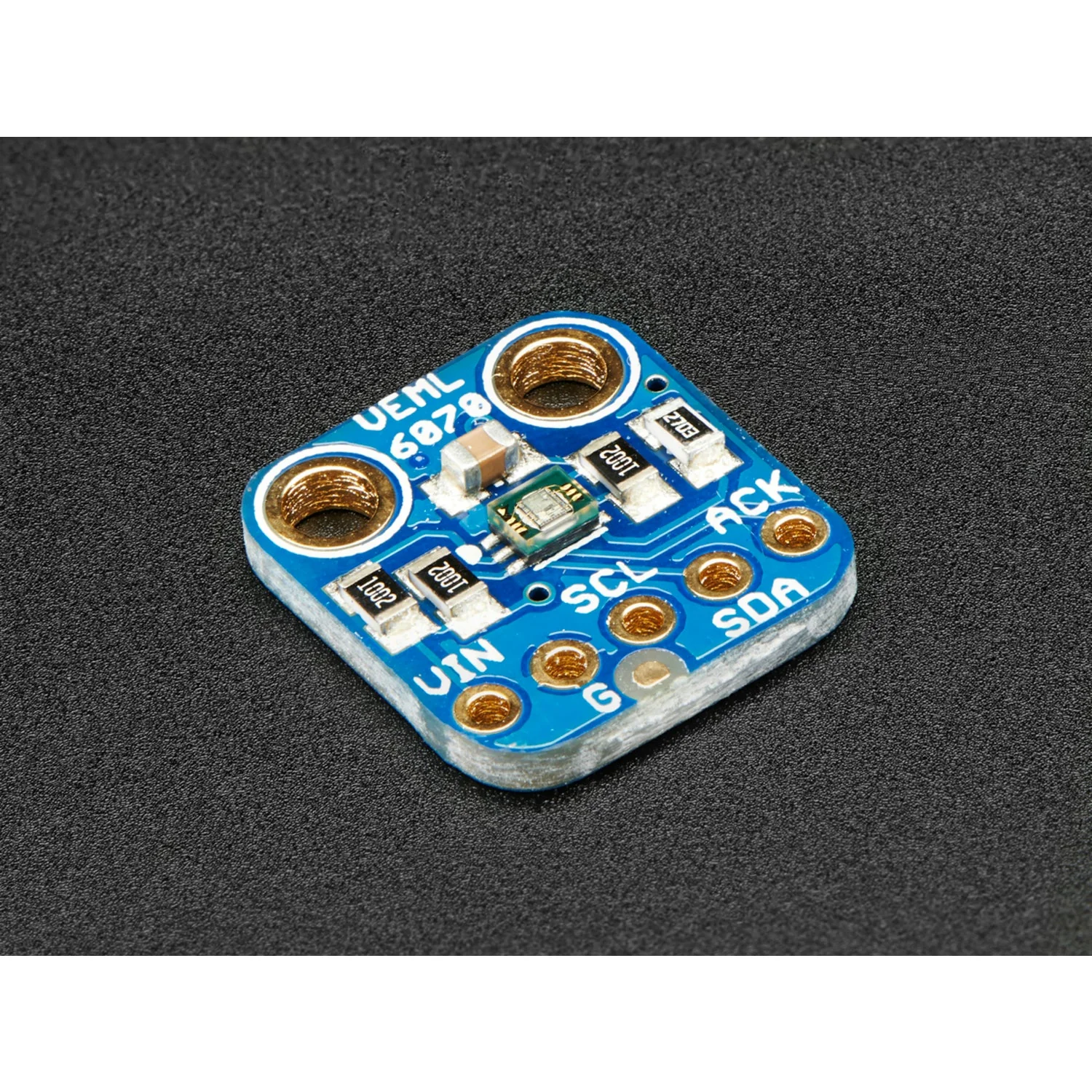
Adafruit VEML6070 UV Index Sensor Breakout
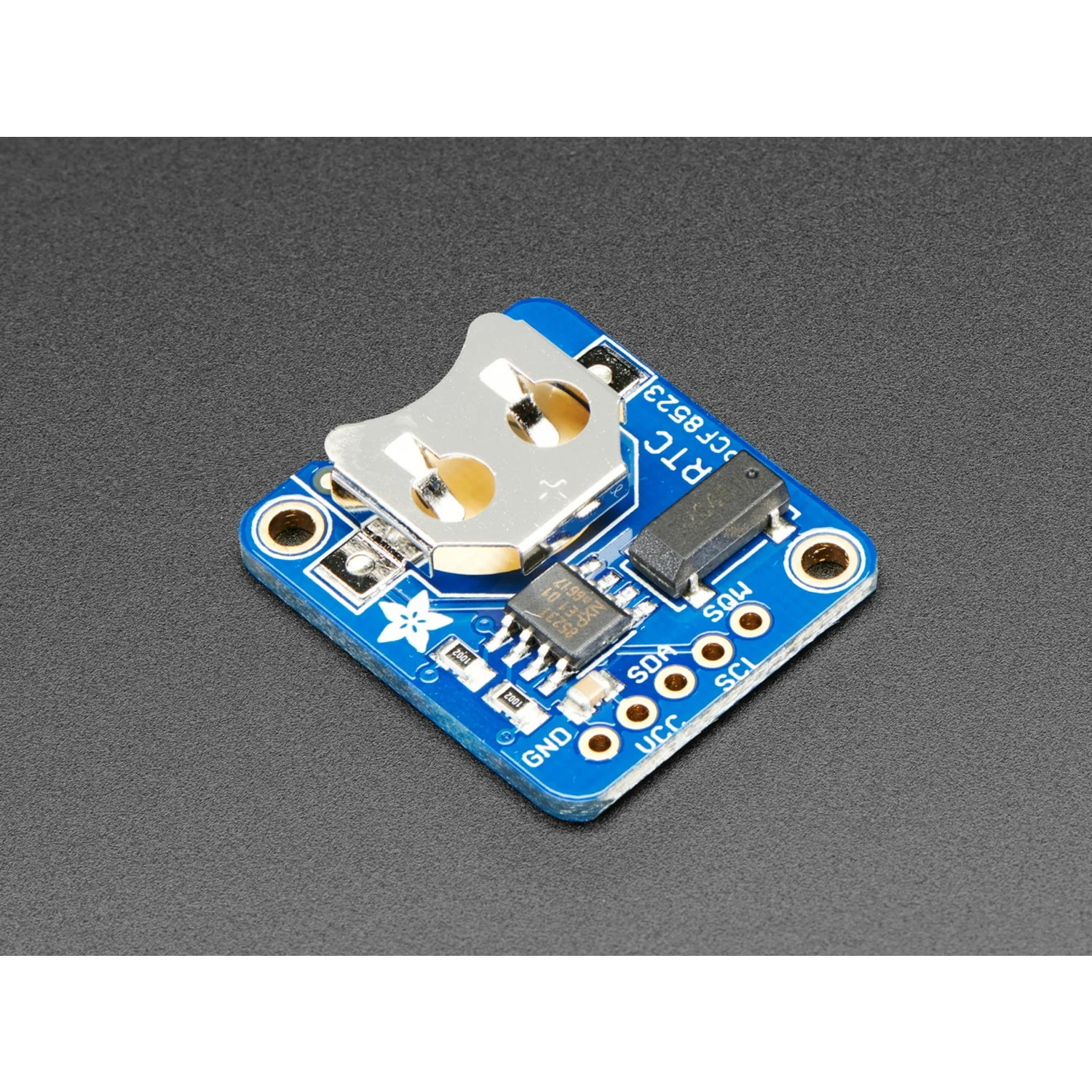
The Adafruit VEML6070 UV Index Sensor Breakout provides true UV-A light sensing over a simple I2C interface. Unlike approximate UV index sensors, the VEML6070 from Vishay uses a genuine UV-spectrum photodiode with an integrated ADC that takes readings and integrates them over 60–500 ms.
The breakout works with 3.3V or 5V power and logic, making it compatible with Arduino, Feather, Raspberry Pi, and other microcontroller platforms. On-board pull-up resistors and a 270K Rset resistor are included — just solder on the header and connect via I2C.
Key Features
- True UV-A Sensor – Genuine UV-spectrum photodiode, not a light-level approximation
- I2C Interface – Simple two-wire communication with integrated ADC
- Adjustable Integration Time – 60 ms to 500 ms for different sensitivity levels
- 3.3V and 5V Compatible – Works with a wide range of microcontrollers
- On-Board Components – Pull-up resistors and 270K Rset resistor included
- Compact Design – Small breakout PCB
Compared To Other UV Sensors
- vs Si1145 – The Si1145 provides UV Index approximations based on light level; the VEML6070 uses a true UV-A photodiode for direct measurement
- vs GUVA Analog Sensor – The GUVA requires an external ADC; the VEML6070 has biasing and ADC built in
Ideal For
- UV exposure monitoring for wearables and outdoor projects
- Weather stations and environmental sensing
- UV curing and sterilisation monitoring
- Solar radiation measurement
Package Contents
- 1× Adafruit VEML6070 UV Sensor Breakout (assembled and tested)
- 1× Header strip (requires soldering)
Resources
- Adafruit VEML6070 Tutorial – Wiring, assembly, and example code
Original: $14.51
-70%$14.51
$4.35Product Information
Product Information
Shipping & Returns
Shipping & Returns
Description
The Adafruit VEML6070 UV Index Sensor Breakout provides true UV-A light sensing over a simple I2C interface. Unlike approximate UV index sensors, the VEML6070 from Vishay uses a genuine UV-spectrum photodiode with an integrated ADC that takes readings and integrates them over 60–500 ms.
The breakout works with 3.3V or 5V power and logic, making it compatible with Arduino, Feather, Raspberry Pi, and other microcontroller platforms. On-board pull-up resistors and a 270K Rset resistor are included — just solder on the header and connect via I2C.
Key Features
- True UV-A Sensor – Genuine UV-spectrum photodiode, not a light-level approximation
- I2C Interface – Simple two-wire communication with integrated ADC
- Adjustable Integration Time – 60 ms to 500 ms for different sensitivity levels
- 3.3V and 5V Compatible – Works with a wide range of microcontrollers
- On-Board Components – Pull-up resistors and 270K Rset resistor included
- Compact Design – Small breakout PCB
Compared To Other UV Sensors
- vs Si1145 – The Si1145 provides UV Index approximations based on light level; the VEML6070 uses a true UV-A photodiode for direct measurement
- vs GUVA Analog Sensor – The GUVA requires an external ADC; the VEML6070 has biasing and ADC built in
Ideal For
- UV exposure monitoring for wearables and outdoor projects
- Weather stations and environmental sensing
- UV curing and sterilisation monitoring
- Solar radiation measurement
Package Contents
- 1× Adafruit VEML6070 UV Sensor Breakout (assembled and tested)
- 1× Header strip (requires soldering)
Resources
- Adafruit VEML6070 Tutorial – Wiring, assembly, and example code