LilyPad Light Sensor
The LilyPad Light Sensor is a sewable ambient light sensor designed for wearable e-textile projects. It outputs an analogue voltage from 0 to 5 V proportional to light intensity — approximately 5 V in daylight, 1–2 V under typical indoor lighting, and near 0 V when covered.
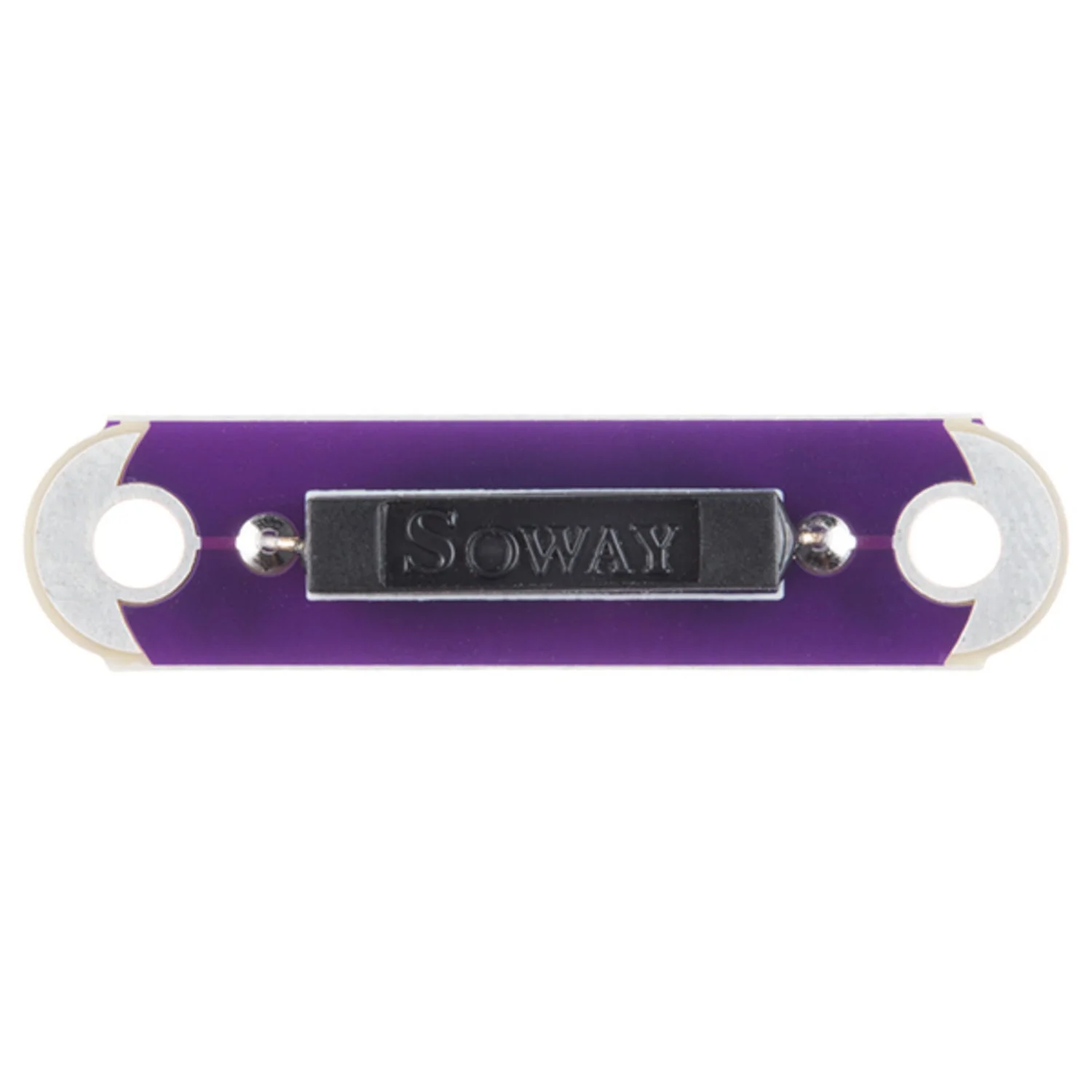
Part of the LilyPad wearable electronics platform, this sensor features large sew-tab pads for attaching with conductive thread. The thin 0.8 mm PCB sits flat against fabric and is washable once properly sealed.
Key Features
- Analogue Light Output – 0–5 V proportional to ambient light level
- Sewable Pads – Large tabs for conductive thread attachment
- Compact – 20 mm diameter, 0.8 mm thick PCB
- Washable – When properly integrated into e-textile projects
Ideal For
- Wearable e-textile projects with light-responsive behaviour
- Interactive clothing and costumes
- LilyPad Arduino-based light sensing
Resources
Original: $5.80
-70%$5.80
$1.74Product Information
Product Information
Shipping & Returns
Shipping & Returns
Description
The LilyPad Light Sensor is a sewable ambient light sensor designed for wearable e-textile projects. It outputs an analogue voltage from 0 to 5 V proportional to light intensity — approximately 5 V in daylight, 1–2 V under typical indoor lighting, and near 0 V when covered.
Part of the LilyPad wearable electronics platform, this sensor features large sew-tab pads for attaching with conductive thread. The thin 0.8 mm PCB sits flat against fabric and is washable once properly sealed.
Key Features
- Analogue Light Output – 0–5 V proportional to ambient light level
- Sewable Pads – Large tabs for conductive thread attachment
- Compact – 20 mm diameter, 0.8 mm thick PCB
- Washable – When properly integrated into e-textile projects
Ideal For
- Wearable e-textile projects with light-responsive behaviour
- Interactive clothing and costumes
- LilyPad Arduino-based light sensing