Adafruit MCP2221A Breakout - General Purpose USB to GPIO ADC I2C - Stemma QT / Qwiic
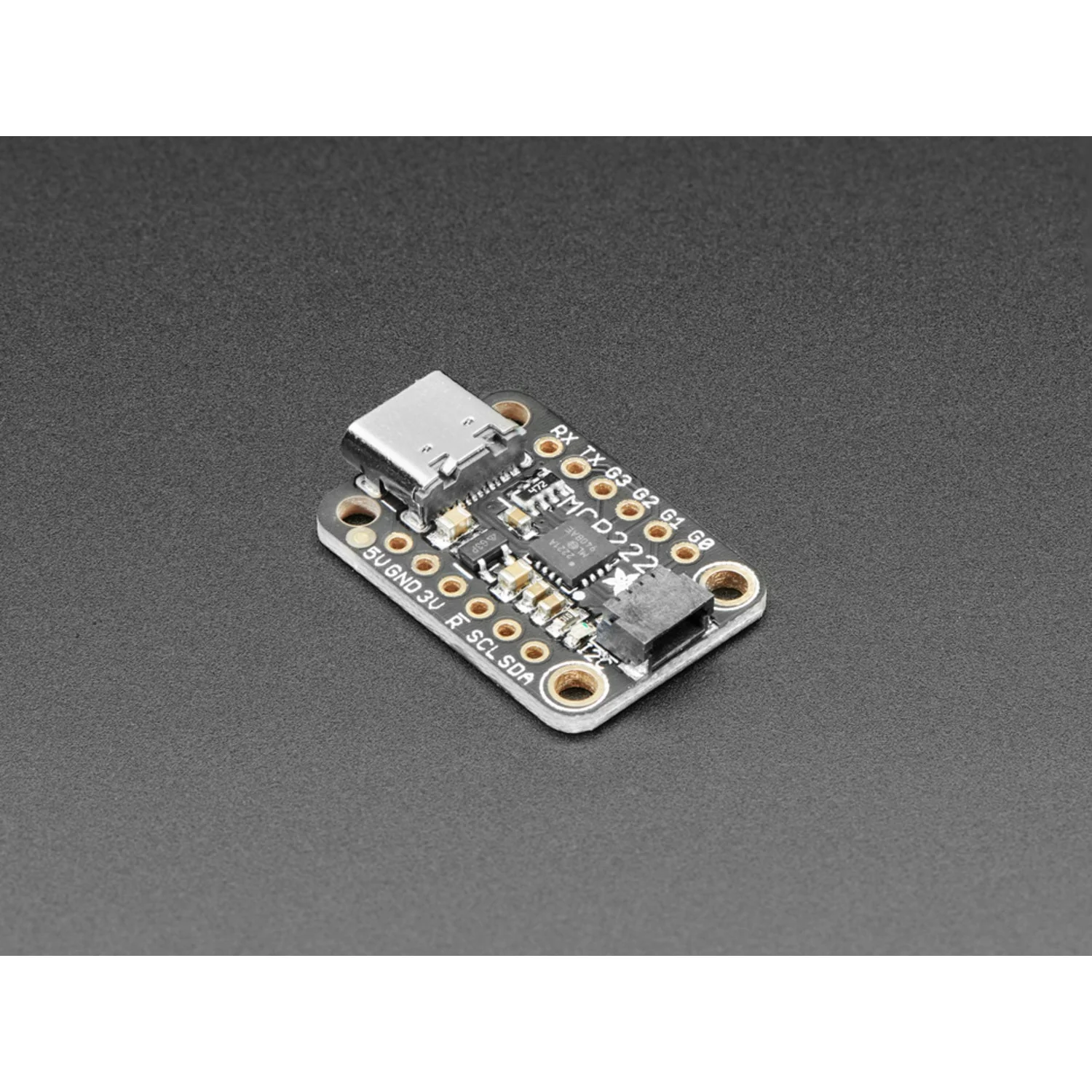
The Adafruit MCP2221A Breakout lets your computer talk directly to I2C devices, sensors, and GPIO — no microcontroller required. Drive an OLED display, read a colour sensor, flash LEDs, or read buttons straight from Python on Mac, Windows, or Linux.
The MCP2221A from Microchip provides USB-to-I2C and USB-to-GPIO functionality with built-in 10-bit ADC inputs and a 5-bit DAC output. Because there's no firmware to deal with, you can quickly iterate and test I2C devices and digital/analogue I/O directly from your computer using CircuitPython libraries.
Key Features
- USB to I2C Bridge – Connect I2C sensors, displays, and drivers directly to your computer
- 4× GPIO Pins – Digital input/output with 10-bit ADC and 5-bit DAC capability
- USB-C Connector – Modern, reversible USB connection
- On-Board 3.3V Regulator – Clean power for connected devices
- STEMMA QT / Qwiic Port – Solderless I2C connection with 3.3V power and logic
- Cross-Platform Python Support – Works with Mac, Windows, and Linux using CircuitPython libraries
- No Firmware Required – Plug in and start communicating immediately
Ideal For
- Rapid prototyping and testing I2C sensors from a computer
- Python-based hardware projects without a microcontroller
- Desktop automation with GPIO, ADC, and DAC
- Educational projects exploring serial communication protocols
Package Contents
- 1× Adafruit MCP2221A Breakout board (with STEMMA QT / Qwiic connector)
Resources
Original: $12.68
-70%$12.68
$3.80Product Information
Product Information
Shipping & Returns
Shipping & Returns
Description
The Adafruit MCP2221A Breakout lets your computer talk directly to I2C devices, sensors, and GPIO — no microcontroller required. Drive an OLED display, read a colour sensor, flash LEDs, or read buttons straight from Python on Mac, Windows, or Linux.
The MCP2221A from Microchip provides USB-to-I2C and USB-to-GPIO functionality with built-in 10-bit ADC inputs and a 5-bit DAC output. Because there's no firmware to deal with, you can quickly iterate and test I2C devices and digital/analogue I/O directly from your computer using CircuitPython libraries.
Key Features
- USB to I2C Bridge – Connect I2C sensors, displays, and drivers directly to your computer
- 4× GPIO Pins – Digital input/output with 10-bit ADC and 5-bit DAC capability
- USB-C Connector – Modern, reversible USB connection
- On-Board 3.3V Regulator – Clean power for connected devices
- STEMMA QT / Qwiic Port – Solderless I2C connection with 3.3V power and logic
- Cross-Platform Python Support – Works with Mac, Windows, and Linux using CircuitPython libraries
- No Firmware Required – Plug in and start communicating immediately
Ideal For
- Rapid prototyping and testing I2C sensors from a computer
- Python-based hardware projects without a microcontroller
- Desktop automation with GPIO, ADC, and DAC
- Educational projects exploring serial communication protocols
Package Contents
- 1× Adafruit MCP2221A Breakout board (with STEMMA QT / Qwiic connector)